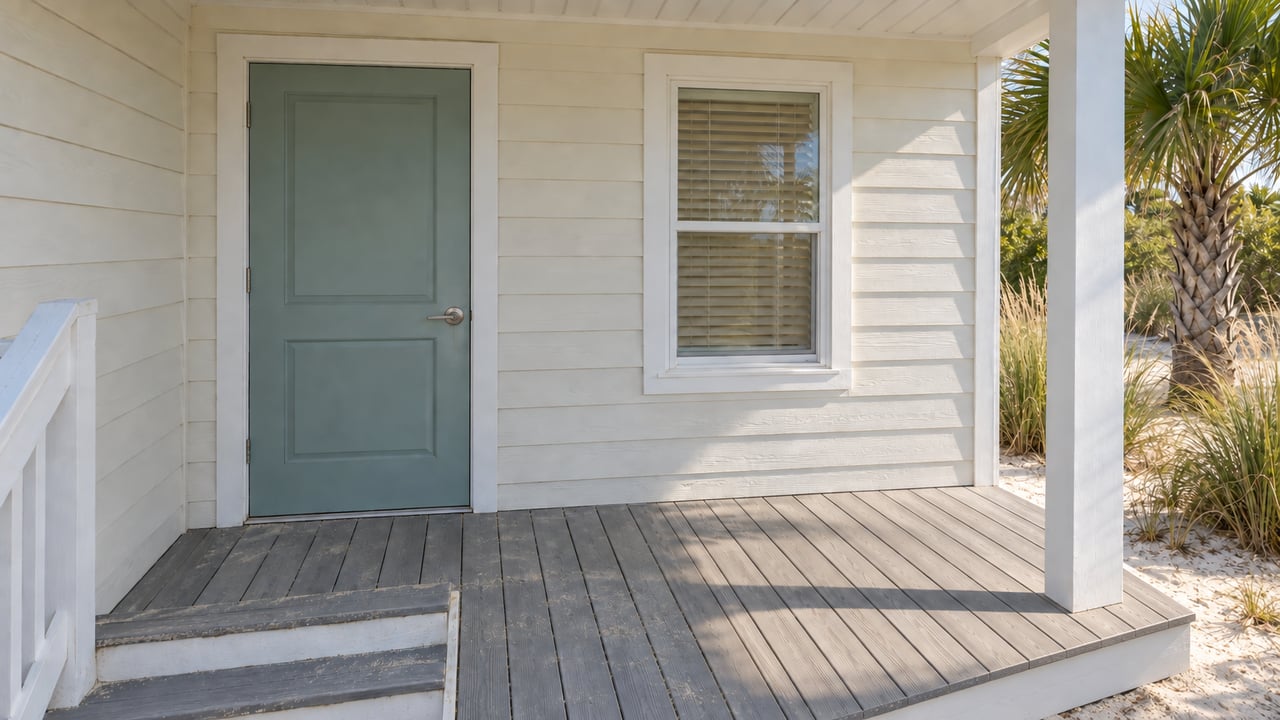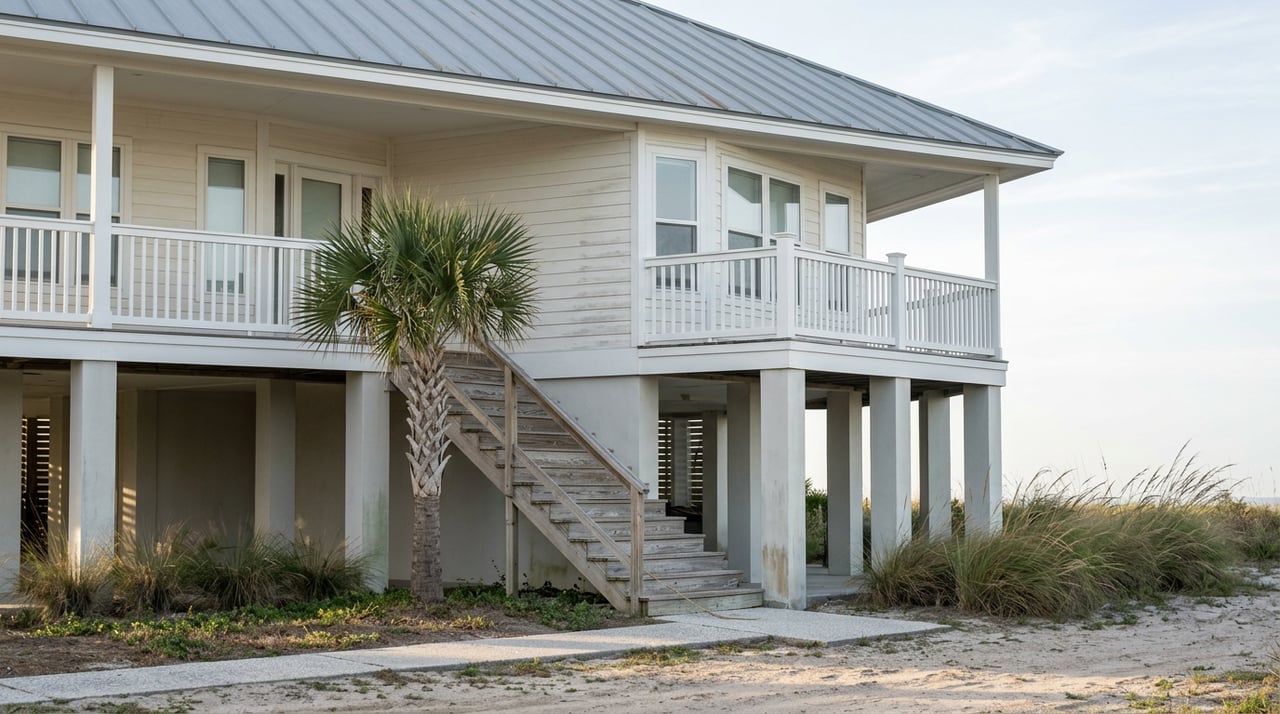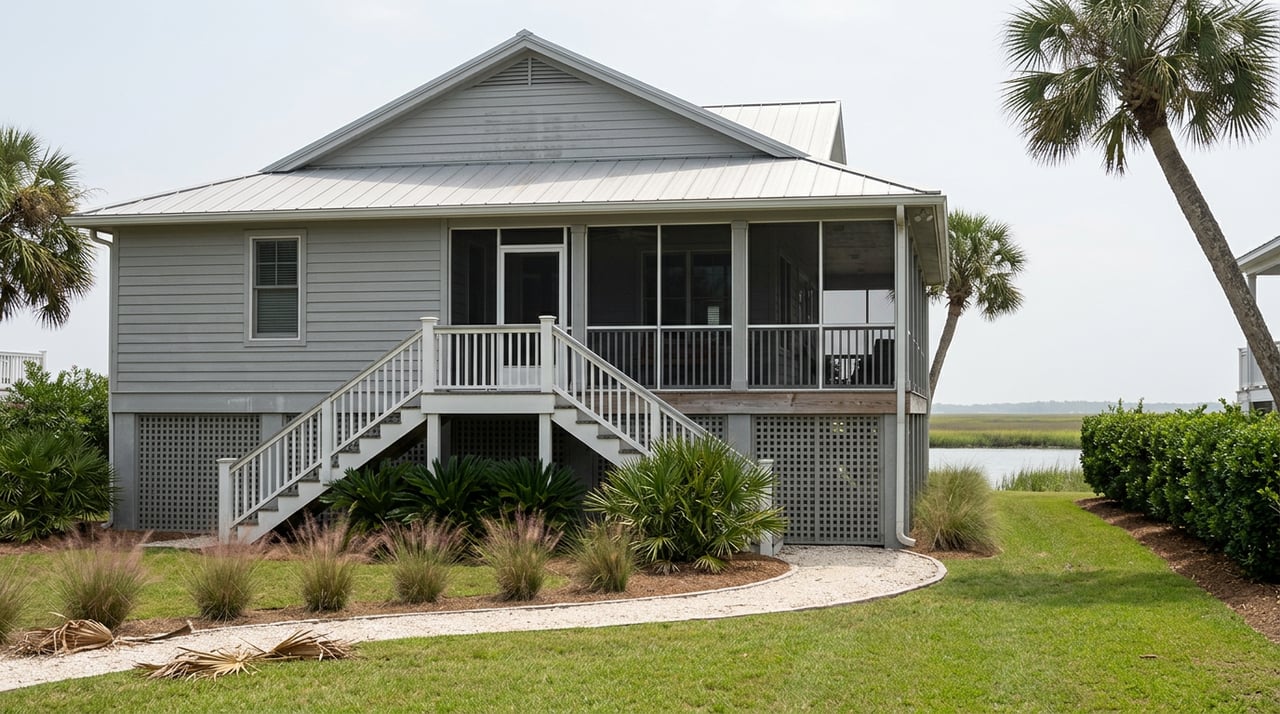
A buyer working through due diligence on a home in Cape Breezes recently got two numbers back in the same week: a private flood insurance quote for the house she was under contract on, and a friend's quote for a comparable place a half mile south, same square footage, same distance from the water. The first number was low enough to fold into a normal budget conversation. The second was high enough to change the offer.
Nothing about the two houses looked different in photos. The difference was drawn on a federal map neither listing photo shows.
The Line Nobody Draws on a Site Plan
Most of Cape San Blas sits inside the Coastal Barrier Resources System, a designation Congress created in 1982 to discourage development on fragile coastal barriers by pulling federal money out of the equation. Properties inside that system cannot get flood coverage through FEMA's National Flood Insurance Program. There is no federally subsidized construction lending either, and no FEMA disaster assistance for infrastructure inside the boundary. The U.S. Fish and Wildlife Service, which administers the designation, is direct about what it does and does not restrict: it withdraws federal financial backing, not the right to build.
Here is the part that changes how a buyer should actually shop the north end of the Cape. One neighborhood on the peninsula has been removed from that federal system entirely. Cape Breezes is the exception. Homes there qualify for standard federal flood insurance treatment the way a home in an ordinary coastal zone would, while a comparable house a few streets away can be locked out of that program permanently because of where the boundary line was drawn decades ago, not because of anything about the structure itself.
Two closings from earlier this year in Cape Breezes show what that carve-out is worth in practice. A five-bedroom bayfront home on Leeward Street, built with an elevator and a private infinity pool set into the bayside deck, sat on the market a long time at 652 days before closing in February 2026 at $3,000,000 cash, on a lot mapped as Zone X with no flood insurance requirement attached. A smaller, older home on Cape San Blas Road in the same neighborhood, a 2005-built three-bedroom on a half-acre bayside lot with Gulf and bay views, closed the same month at $769,000, also on an X-zone lot carrying no mandatory flood premium at all. Different price points, different ages, same zoning outcome.
The Same Break Shows Up Outside Cape Breezes Too
FEMA does not map flood risk by subdivision name. It maps elevation, parcel by parcel, which means a lot can sit inside the federal CBRA boundary and still land in Zone X if the natural ground is high enough. That is exactly what happened at 116 Freedom Trail in the Sunset Beach Estates subdivision, a Gulf-view home built in 2024 on a 107-foot-wide lot mapped as X zone specifically because of its elevation. It closed in early April 2026 at $1,285,000 with conventional financing, no flood policy required by the lender.
A vacant lot in the Hibiscus Beach subdivision told the same story on the land side. A 110-foot-wide, quarter-acre parcel with Gulf views, sitting first-tier behind a beachfront home near Rish Park, carried an X-zone designation and sold in March 2026 for $395,000, more than double the $189,000 the sellers had paid for the same lot in 2015.
Put these four side by side and a pattern shows up that has nothing to do with price:
| Property | Subdivision | Flood Zone Status | Days on Market | Closed |
|---|---|---|---|---|
| 7052 Leeward Street | Cape Breezes | X zone, CBRA-exempt neighborhood | 652 | $3,000,000 (Feb 2026) |
| 7070 Cape San Blas Road | Cape Breezes | X zone, CBRA-exempt neighborhood | 86 | $769,000 (Feb 2026) |
| 116 Freedom Trail | Sunset Beach Estates | X zone (elevated parcel inside CBRA) | 49 | $1,285,000 (Apr 2026) |
| Lot 21 Gulf Hibiscus Drive | Hibiscus Beach | X zone (elevated parcel inside CBRA) | 2 | $395,000 (Mar 2026) |
Days on market ranged from 2 to 652 across these four deals, which is the honest caveat here. An X-zone designation removes one specific piece of buyer friction. It does not guarantee a fast sale, and it is not the only variable in play. Price, condition, and how a seller responds to inventory all still matter more day to day than flood zone status alone. What the zone designation does is take one unpredictable, expensive line item off the table before a contract gets signed instead of during the due diligence window when it is harder to renegotiate.
Compare that to what a similarly sized home outside those carve-outs typically faces. On the Cape overall, private flood coverage on a beachfront home in Zone VE, where wave action during a flood event is a real design factor, commonly runs somewhere in the $5,000 to $20,000-a-year range on a high-value property, depending on elevation and construction. Bayside AE-zone homes usually land lower, often in the $2,000 to $10,000 range. A voluntary Zone X policy, by contrast, typically runs $400 to $1,200 because there is no mandatory requirement behind it at all. That is the spread a buyer is actually shopping when they compare a Cape Breezes listing to a standard CBRA-zone listing two streets over. It has nothing to do with square footage.
What This Means When You Write the Offer
The practical move is to stop treating "north Cape" as one insurance conversation and start asking the zone question on every specific address before you get attached to it. A property's flood zone and CBRA status are tied to the parcel, not the neighborhood reputation, so the only way to know is to check the individual lot.
A few things worth confirming before you write an offer:
- Whether the parcel sits inside the CBRA boundary or in one of the exempted areas like Cape Breezes
- The FEMA flood zone designation on that specific address, not the general area
- Whether a Letter of Map Amendment might apply, particularly on vacant lots or homes built on naturally higher ground, since FEMA judges LOMA eligibility on the elevation of the ground itself and does not give credit for how high a house sits on pilings
- A real, address-specific insurance quote during your due diligence window rather than an estimate based on a neighboring sale
Lenders add one more layer worth knowing. Mortgage companies require flood coverage on any property in a high-risk zone regardless of whether it sits in a CBRA area, so being locked out of NFIP does not mean being locked out of the requirement. It means the requirement gets filled by a private carrier instead. Florida's private flood market has broadened over the past couple of years, with more carriers now writing coastal barrier policies and competition pulling rates down from where they sat a few years back, but private premiums still tend to run above what NFIP would have charged for the same risk.
None of this happens in a vacuum. The broader market that includes Cape San Blas, Indian Pass, and the CR-30 corridor logged 157 closed transactions across homes and vacant land in 2025, totaling $116.18 million, up from 145 transactions and $110.7 million the year before. Of that, 97 homes sold for a combined $100.3 million, a 15 percent jump in residential dollar volume from 76 homes the year prior. Inventory has been climbing through 2026 alongside that recovery, and days on market have been averaging around 109 days on the Cape so far this year. That is a market with enough breathing room for a buyer to ask hard questions about a specific parcel before committing, rather than feeling pressured to skip the flood zone conversation to keep a deal moving.
Frequently Asked Questions
Does a CBRA designation mean I cannot get a mortgage? No. It means federally backed flood insurance is off the table, so any lender-required flood coverage comes from a private carrier instead. Conventional financing still applies, as several of the sales above show.
Can I just skip flood insurance if my home is technically in Zone X? If a lender requires it based on your loan terms or the risk profile changes later, you may still need coverage, but Zone X carries no mandatory flood insurance requirement by default, which is why several of these sales closed without one.
Is Cape Breezes the only exception on the peninsula? It is the one neighborhood that has been formally removed from the CBRA designation. Elsewhere, individual parcels can still land in Zone X through natural elevation or a successful LOMA, which is why the pattern shows up in more than one subdivision.
How do I find out if a lot I am considering is inside the CBRA boundary? This is address-specific information that should be confirmed before you write an offer, not assumed from the neighborhood name or how far the lot sits from the Gulf.
North Cape San Blas rewards buyers who ask the zone question early, not the ones who assume a beach community this size behaves like one uniform market. If you are comparing specific parcels on the Cape and want a straight read on what a given address actually carries before you write an offer, Beach Properties can walk the flood zone and CBRA picture with you parcel by parcel, so the insurance conversation happens before contract instead of during it.