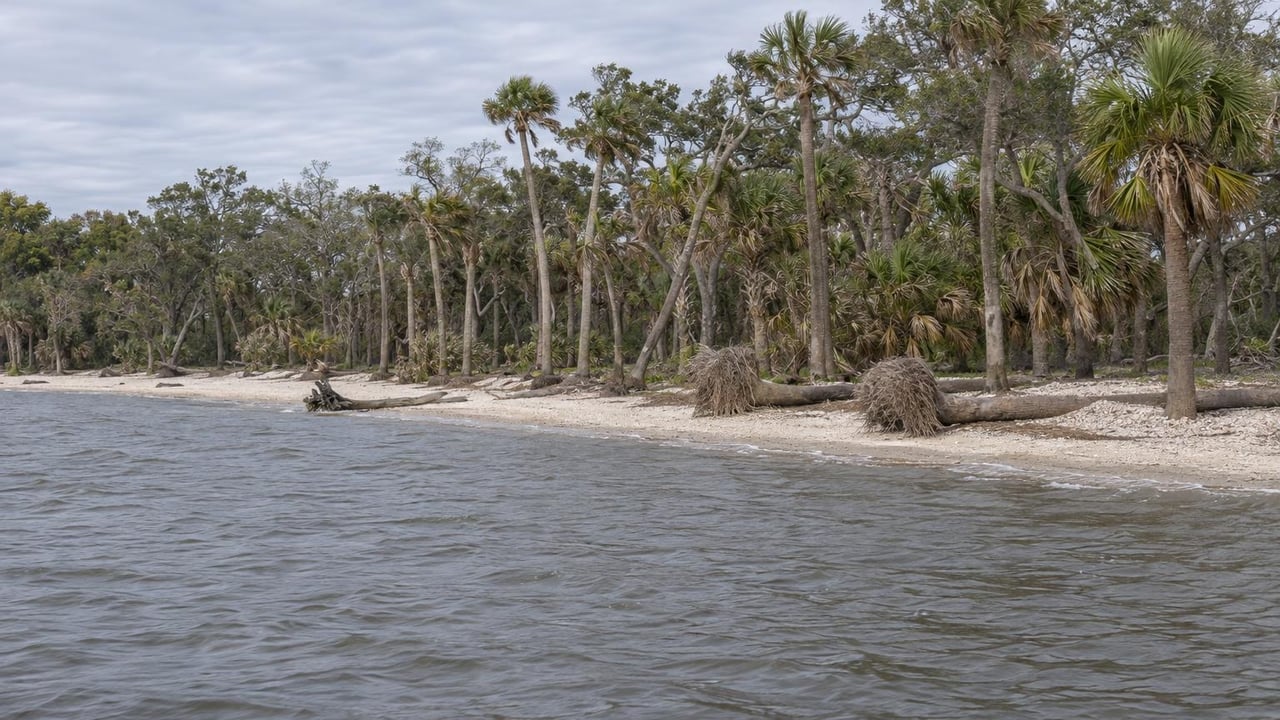
The boat ride from the Indian Pass ramp to St. Vincent Island takes about five minutes. The Friends of St. Vincent's account of a late-September crossing with the refuge biologist calls it "the short, five-minute journey across the pass" to the dock on an island of more than 12,000 acres. Getting a seat on a guided tour takes longer. The Friends of St. Vincent National Wildlife Refuge have four wagon tours on the calendar between now and late January. Sign-ups for each one open at 8 a.m. on a single Friday morning, and seats are strictly limited.
For anyone living along CR-30, the ramp is a short drive. What matters is the calendar, and this winter it fits on an index card. The refuge's sambar deer hunt ran November 19 through 21 and is over. The tour season starts two weeks from today.
Four Thursdays and the Fridays before them
The Friends post each wagon tour as its own event, and registration opens on the Friday before each one.
| Wagon tour | Registration opens, 8 a.m. Eastern |
|---|---|
| Thursday, December 10, 2026 | Friday, December 4 |
| Thursday, December 17, 2026 | Friday, December 11 |
| Thursday, January 7, 2027 | Friday, January 1 |
| Thursday, January 21, 2027 | Friday, January 15 |
Two of those Fridays land on awkward days. Sign-ups for the first January tour open on New Year's Day. Sign-ups for the January 21 tour open on the middle day of the refuge's January deer hunt. The tour itself is free. You reserve by phone at (850) 229-1065, and the Friends ask for advance notice if you have to cancel so the seat can go to someone else.
If the list fills before you get through, there is a second way on. On the morning of a wagon tour, you can come to the Indian Pass boat ramp and put your name on a standby list in case seats open up. Registered guests are asked to be at the ramp by 8:15 a.m. Eastern, so standby means an early start too.
The Friends handle the logistics, and refuge staff and volunteers drive the wagons and lead the tours. Tours run through fall, winter and spring, usually once or twice a month. The four dates above are what's posted for December and January. Walking tours are announced separately when they're scheduled, and they depend on the weather and on whether volunteers are available. Any tour can be canceled for bad weather or rough water, and a winter front coming through the pass can do it.
The Friends also say you must be able to walk "a decent distance in soft sand." Bring your own water, bug spray and sunscreen. Bug spray in December can look like overpacking until you're standing near a marsh edge on a calm, warm morning.
The boat is the easy part
Every crossing runs through one operator, the St. Vincent Island Shuttle. Licensed Captain Joey Romanelli runs it from Indian Pass Road, C-30B. Wagon tour guests pay the shuttle $20 per person, cash only. The Friends welcome a voluntary donation on top of that.
You don't need a tour to use the shuttle. The service runs year-round by reservation and leaves on your schedule. Its posted fares are $20 for an adult, $15 for a child under 10, $30 for an adult with a bicycle and $60 for an e-bike.
The bike fares matter because of what's on the other side. The U.S. Fish and Wildlife Service describes the island's roads as sandy, open to foot and bicycle traffic, and short on signs. Visitors are told to plan around local tides, currents and marine conditions. A wagon tour covers more ground than most people can walk in a morning. A self-guided trip with a bike is the other way to see more than the area near the dock.
The refuge's hunt calendar is the other date to keep in mind. St. Vincent's 2026-27 hunt brochure lists an archery hunt that ran October 29 through 31, the sambar hunt that just ended, and one more this season, a white-tailed deer muzzleloader hunt from January 14 through 16, 2027. That hunt falls in the week between the January 7 and January 21 wagon tours, and the brochure is the place to check before planning a January crossing.
What's on the island this winter
The best reason to go this year is an animal that's hard to see. St. Vincent is an island breeding site for endangered red wolves. In late September, volunteers working with the refuge biologist came across red wolf tracks in the sand headed out to the beach. The Friends' account, A Day with Biologists and Botanists, says a breeding pair is living on the island now and biologists hope for a litter next spring. Pups would stay on the island for about 18 months before moving to Alligator River National Wildlife Refuge in North Carolina.
So a December or January tour crosses the island at a particular point in that cycle, with the adult pair settled and the hoped-for pups still a few months off. The September crew also got a look at the acclimation pens where wolves are introduced to the island's climate and native food sources and treated by veterinarians as needed.
The same account describes a few other things. A new refuge sign stands at the dock. The crew drove 0 Road out to the beach, packed away the cages that protect sea turtle nests at the end of the May-to-October nesting season, and stopped at water control structures that balance water levels across the island's ponds and marshes. Volunteers also stopped at a slash pine so large that three of them couldn't link arms around it. They put its likely age at several hundred years.
There's no visitor center on the island. The refuge's administrative office is on the mainland in the historic Fry-Conter house at 96 5th Street in Apalachicola. Anything you want explained, you'll need to ask on the wagon or at that office, because the island itself has few signs.
The road to the ramp, now and later
The trip starts at the end of County Road 30-B, where the Fish and Wildlife Service lists a paved boat ramp with free parking. That road is in line for work. Gulf County's bid for "Indian Pass Road Improvements" covers replacing the Indian Pass Road Bridge, No. 510020, building a temporary bypass and resurfacing about 0.36 miles of CR-30B. The contract allows 210 days from the notice to proceed. Bids were opened at the county commission's September 16 meeting, according to the county's bid notice. Citizen Portal's coverage of the commission's September meeting reports the board approved Murphy Bridge Corporation for the job at $3,936,631.42.
If you use the ramp regularly, expect a bypass lane on the way to it at some point during the project's 210-day run. Allow a few extra minutes on an 8:15 tour morning once the crews are out.
On the way home, the Indian Pass Raw Bar is on CR-30A. Its own site lists noon to 9 p.m., Tuesday through Sunday, and closed Mondays. All four wagon tours fall on Thursdays, which are on that schedule, and the hours are worth confirming with a call during the holidays. For more on the roads and beach rules in this corner of the county, see our earlier piece on how CR-30's beach rules change by stretch and our CR-30 neighborhood page. Our Indian Pass page covers the community at the end of the road.
Some of us at Beach Properties Real Estate Group live a short drive from the Indian Pass ramp. If you're showing visiting family the Forgotten Coast this winter and want to talk through how life along CR-30 works, from the ramp to the bay side, we're glad to help. Contact us anytime.