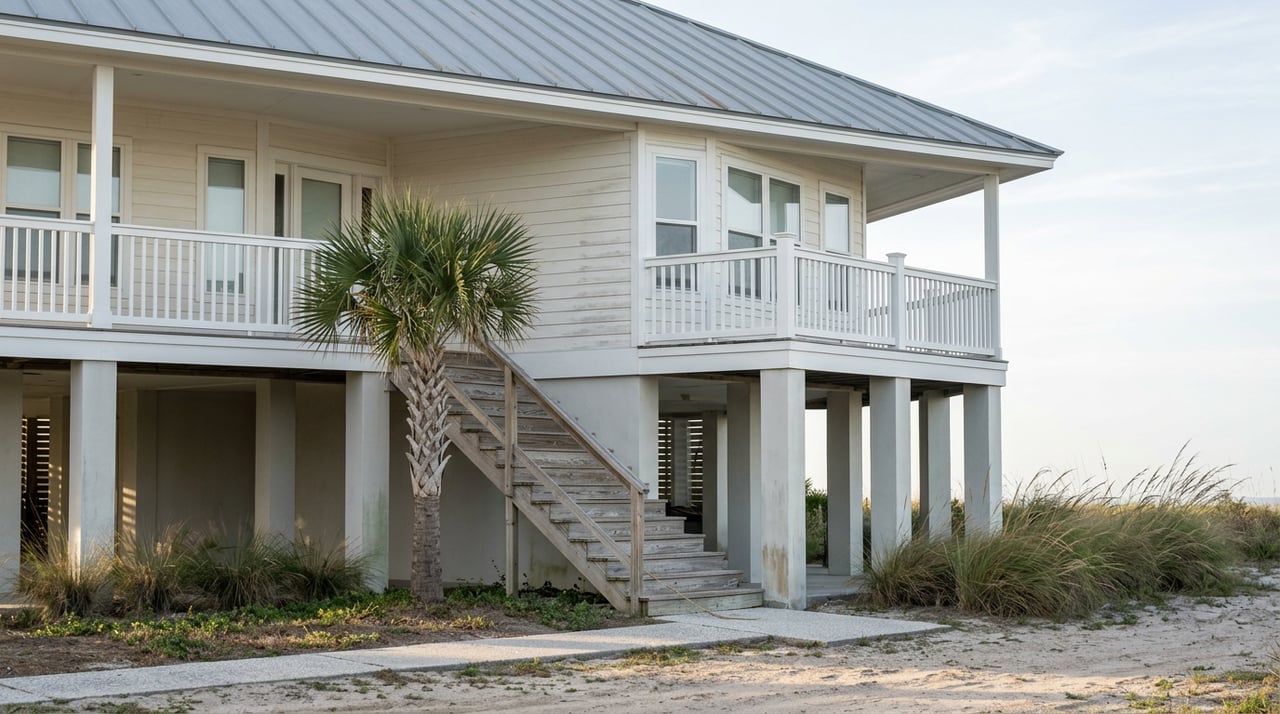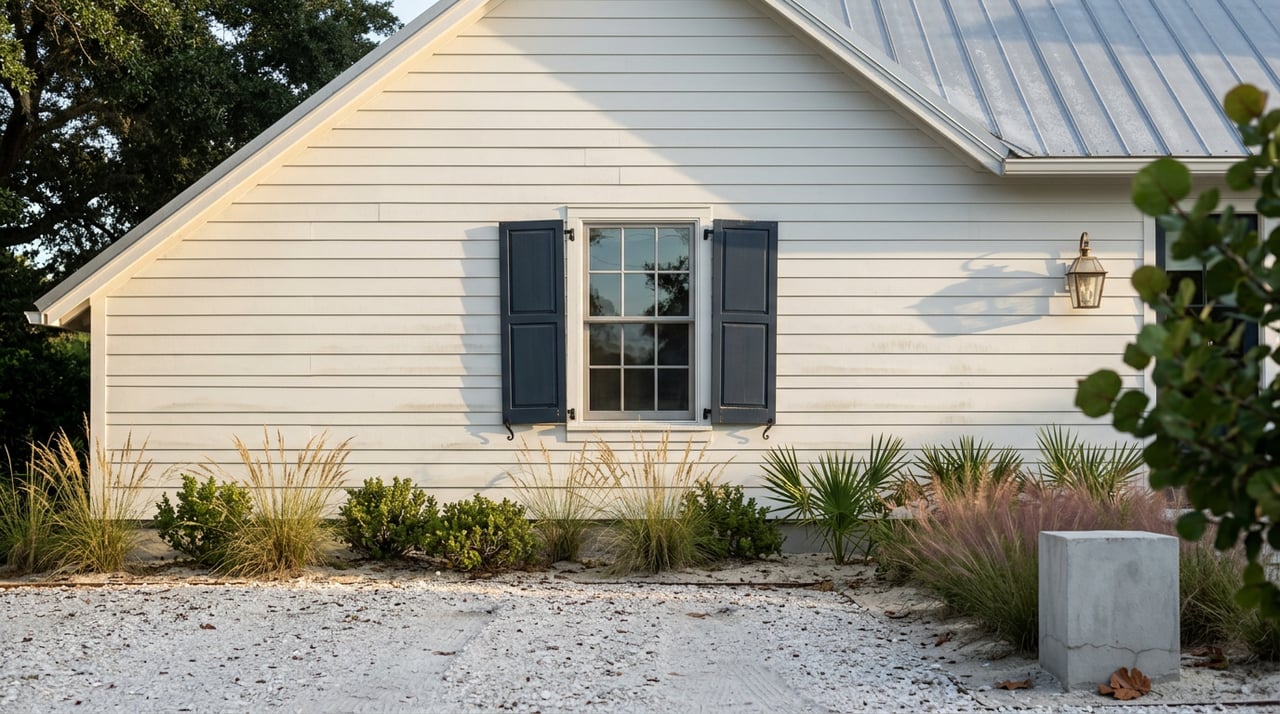
A Gulf-front cottage on Indian Pass and a Gulf-front cottage on a built-out barrier island can look identical in a portal search. Same square footage, same elevation certificate, similar per-foot numbers. The listing page will not tell you that one of them is on a well and a septic system inside a Gulf County unincorporated peninsula, and the other is on a municipal grid with a lifeguard tower down the beach. That distinction is where the actual negotiation happens in 2026.
The thesis: In a softening statewide market, buyer leverage on Indian Pass is not captured by shaving the sticker price. It is captured in the contingency language around septic feasibility, well water, wind and flood underwriting, and elevation. The reader who understands that walks in with more real leverage than the reader who arrives quoting the median.
The statewide number is already priced in
Florida's typical home value slipped to a fresh cycle low of $392,443 in May 2026, down about 3.0% year over year, with roughly one in four listings statewide taking a price cut through the spring. The 30-year fixed rate printed at 6.49% on June 25, 2026, and the median list price across the state sat near $495,000 mid-year. Florida also led the nation in foreclosure rate through the first half of 2026, at 0.27% of housing units.
These are ambient conditions. Every buyer walking into an Indian Pass showing has already read some version of them. Quoting the median back at a seller is not leverage. It is table stakes.
What Indian Pass actually is, mechanically
Indian Pass sits about eight miles south of Port St. Joe on a narrow peninsula where Apalachicola Bay meets the Gulf, and it is one of Gulf County's residential unincorporated coastal communities. Practically, that shapes almost everything a buyer needs to diligence.
There is no city hall on Indian Pass. There is no municipal water main under the road. Homes here run on private wells and on-site septic systems, and the road grid is a set of numbered access streets ending at the sand. Land's end is the Indian Pass Boat Ramp at 2850 Indian Pass Road, where St. Vincent National Wildlife Refuge sits across the short channel, reachable only by ferry or private boat. The commercial density on this stretch is famously thin. The Indian Pass Raw Bar is the anchor, and the county tourism materials describe the whole peninsula in Old Florida terms because the built environment genuinely has stayed low, quiet, and dispersed.
For a portal shopper coming out of a denser Florida beach market, the friction is not the lifestyle. The friction is that a well and a septic system are not appliances. They are permitted infrastructure that comes with rules that changed recently.
The septic clock that started January 1, 2025
This is the item most out-of-market buyers miss.
As of January 1, 2025, septic permitting in Gulf County moved from the county health department to the Florida Department of Environmental Protection. The Florida Department of Health confirms the transfer for Gulf and 15 other counties as part of the state's OSTDS program, and construction standards continue to run under Florida Statute 381.0065 and Chapter 62-6, F.A.C.
The consequence for a buyer is procedural, not theoretical. Gulf County's Building Department, which enforces the Florida Building Code 2023 (eighth edition), has been clear that landowners must verify a septic application meets county ordinance and density requirements before submitting to FDEP. Skip that step, and the county can deny the later building permit even after FDEP has issued the septic authorization. On a vacant Indian Pass lot, that sequencing risk is the difference between a lot that pencils and a lot that stalls for a season.
Two questions belong in every Indian Pass land offer and in most home offers where the septic is more than a decade old:
- Has the current septic system been evaluated and is the county ordinance and density review documented?
- If new construction is contemplated, is the proposed footprint compatible with the setbacks a coastal peninsula site typically triggers?
Neither question requires a lawyer. Both require a broker who has already walked a client through the FDEP transition.
The beach driving permit is a zoning signal, not a novelty
Beach driving on Indian Pass is part of the local culture, and it is regulated. Gulf County requires an annual beach driving permit issued through the Gulf County Tax Collector, with a 15 mph limit, use restricted to designated access points, and validity through December 31 of the issue year. There are no lifeguards on public beaches in the county.
Read that as a market signal, not a brochure item. It tells a buyer several concrete things: the county intends this shoreline to remain drive-on, the density will stay dispersed enough to support it, and the household budget needs to include a 4WD vehicle if the appeal of the home is beach access from the driveway rather than from the sand. Public walk-on and drive-on entries in the area include Lee Street, South Oak Street, and Seminole Street.
What the listing shows vs. what the deal actually turns on
| Portal detail | What actually moves the transaction on Indian Pass |
|---|---|
| List price and price-per-foot | Statewide comps are already softening; the negotiation lever is terms, not headline price |
| "Septic" checkbox | Age of the tank, drainfield location, FDEP permit status, and county ordinance and density review |
| "Well" checkbox | Recent potability test, flow rate, casing depth, and proximity to any adjacent septic drainfields |
| "Waterfront" or "Gulf view" | Elevation certificate, flood zone on the current FEMA panel, and wind mitigation form for insurance binding |
| "Beach access" | Whether the nearest designated drive-on access is Lee, South Oak, or Seminole Street, and how the access is deeded |
| "New construction" | Sequence of FDEP septic authorization, county ordinance and density verification, and building permit under FBC 2023 |
None of these are exotic items. They are the standard diligence checklist for a coastal unincorporated peninsula. What is unusual is how often they get skipped by buyers who assume Indian Pass behaves like a municipal beach market.
Where your leverage actually lives right now
Statewide inventory dynamics matter here, but they matter as leverage, not as a price target. Sellers who withdrew listings this winter to avoid the price cut cycle are watching softening spring and summer data. The one in four cut-price share is a national headline. On Indian Pass, the way a buyer converts that headline into real advantage is by asking for contract terms that a portal-only buyer would not know to write.
A useful contingency stack for an Indian Pass offer in this market:
- Septic diligence period. Written FDEP status confirmation and, on any lot within an easy walk to the lagoon or the Gulf, documented county ordinance and density review.
- Well diligence period. Independent potability and flow test, plus documented separation from adjacent drainfields consistent with state well construction standards.
- Insurance binder window. Wind and flood quotes in hand before removing financing contingencies. Elevation certificate produced by the seller when one exists. In a 2026 environment where the Florida conforming loan limit sits at $832,750 and rates hover near the mid-6s, uninsurable at the expected premium equals unfinanceable.
- Access and easement review. Deeded beach access language read against the current plat, especially where lots reference a specific numbered street.
- Storm plan disclosure. Evacuation route confirmation. The Gulf County GIS layer lists Indian Pass Road on the evacuation map, which matters for second-home owners planning shoulder-season use.
None of these items are hostile to a seller. Sellers who have owned on Indian Pass for a decade generally know exactly how their well tests and where their tank sits. The buyer who asks the right questions moves faster, not slower.
FAQ
Is Indian Pass a buyer's market right now? Statewide indicators point that way through mid-2026. Florida's typical home value is off about 3.0% year over year through May 2026, and about 44% of statewide listings had taken a price cut by mid-year. Indian Pass is thin on comps in any given quarter, so the answer for a specific address depends more on days on market and seller motivation than on the headline. A local broker with active MLS access can price the individual home against real recent sales.
Can I finance a lot on Indian Pass and build later? Yes, with the sequencing caveat above. FDEP now issues the septic permit, and the county still enforces ordinance, density, and building code. Lot loans and construction loans on the Forgotten Coast typically require higher down payments than a second-home purchase, and the 2026 Florida conforming loan limit of $832,750 defines where jumbo underwriting begins.
What does the beach driving permit cost and where do I get it? The permit is issued through the Gulf County Tax Collector, is valid through December 31 of the issue year, and comes with a posted 15 mph limit and designated access points on Indian Pass. Fee schedules change periodically, so confirm current amounts with the Tax Collector's office.
How different is Indian Pass from Cape San Blas in practice? Both are Gulf County peninsulas with coastal insurance and elevation considerations. Indian Pass runs quieter, with fewer short-term rentals per mile of shoreline, no municipal utilities, and a smaller commercial footprint anchored by the Raw Bar and the boat ramp. That combination tends to attract a buyer who is optimizing for privacy and land, not for turnkey nightly rental performance.
The best Indian Pass purchases in 2026 will not be won on the last thousand dollars of a counteroffer. They will be won on contingency language that reflects how the peninsula actually works. If you are weighing a move or a second home here, we have walked clients through the FDEP transition, the well and septic diligence, the wind and flood binder process, and the closing quirks that come with unincorporated Gulf County land. Beach Properties Real Estate Group is happy to sit down, review a specific address, and tell you where the real leverage is before you write. Contact Us when you are ready.