By Beach Properties Real Estate Group
Buying a home in Port St. Joe, Cape San Blas, or anywhere along the Gulf County coast is not a transaction you want to figure out as you go. The negotiation phase — from initial offer through inspection to closing — is where deals get made or fall apart, and having a clear strategy going in changes the outcome. The current Florida market gives buyers more room to work with than the peak seller's market years, but strong properties here still attract real competition. Here's what actually moves the needle in Port St. Joe real estate negotiations.
Key Takeaways
- Florida's market has shifted toward buyers in many segments, but well-located Gulf County waterfront properties at realistic prices still move quickly
- Pre-approval is non-negotiable — sellers in this market don't take unverified offers seriously
- Inspection results are your most powerful post-offer negotiating tool; use them strategically
- Cash offers carry significant weight in Gulf County coastal transactions, particularly on investment and vacation home properties
Know the Market Before You Make an Offer
Effective negotiation starts before you write the first word of an offer. The Port St. Joe market is not one uniform thing — it's a collection of distinct segments with different supply and demand dynamics. A beachfront Gulf-front lot on Cape San Blas prices and moves differently than a single-family home in Port St. Joe's downtown historic district, which moves differently again from a bay-view property near Windmark Beach.
Your agent should run a detailed comparative market analysis on any property before you offer. That means looking at what comparable homes sold for in the past 90 days, how long they sat before going under contract, and whether they sold above, at, or below list price. In the current Gulf County market, a meaningful portion of homes are selling below asking — which tells you there's negotiation room, but also tells you to look carefully at why a property has been sitting.
Before making an offer, gather:
- Recent comparable sales within the same coastal corridor (not just Gulf County broadly)
- Days on market history — has the listing had price reductions?
- Flood zone designation and elevation certificate status
- HOA or community restrictions if the property is in WindMark Beach or a similar planned community
- Short-term rental data if you're buying an investment or vacation property
Get Pre-Approved, Not Just Pre-Qualified
This distinction matters more than most buyers realize. Pre-qualification is an informal estimate based on self-reported financial information. Pre-approval means a lender has reviewed your documentation — income, assets, credit — and committed to lending up to a specific amount. Sellers and their agents can tell the difference immediately.
In Gulf County's vacation and investment property market, a significant portion of transactions involve cash buyers. When you're competing with or negotiating alongside cash offers, a fully verified pre-approval letter from a credible lender is your closest equivalent. It tells the seller your financing is real and your offer can close.
Practical steps before you make your first offer:
- Work with a lender who has experience with Florida coastal and investment properties — conventional loan rules differ for second homes and short-term rental properties
- Have your pre-approval letter ready to attach the day you find a property
- Understand whether you're financing a primary residence, second home, or investment property — each has different down payment requirements and rate implications
- Ask your lender about rate lock options if rates are moving
Structure Your Offer Strategically
In a market where homes are sitting longer and buyers have more choices, the first instinct is often to offer well below list price. That works on some properties — particularly those with extended days on market or visible maintenance issues. It backfires on others, specifically the well-maintained, accurately priced Gulf-front or bay-front properties that still attract multiple buyers.
The right offer price comes from the comparative market analysis, not from splitting the difference or testing the seller. If the data supports coming in 5–8% below list on a property that has sat for 90 days, that's a grounded strategy. If a waterfront cottage in Indian Pass just listed at market value, a lowball offer tells the seller you haven't done your research.
Offer terms that carry weight beyond price:
- Earnest money deposit — a higher deposit signals seriousness and financial capability
- Closing timeline — sellers who need a quick close will take a lower offer from a buyer who can close in 21 days
- Seller concessions on closing costs — useful in the current market and worth building into your offer rather than asking for post-inspection
- Personal property — vacation home sellers sometimes leave furnishings; clarifying what transfers can be a meaningful part of negotiations without touching the price
Use the Inspection Period Strategically
The inspection is not just a formality — it's your most important negotiating window after the initial offer is accepted. In Gulf County coastal transactions, a standard home inspection is typically one of several you should consider.
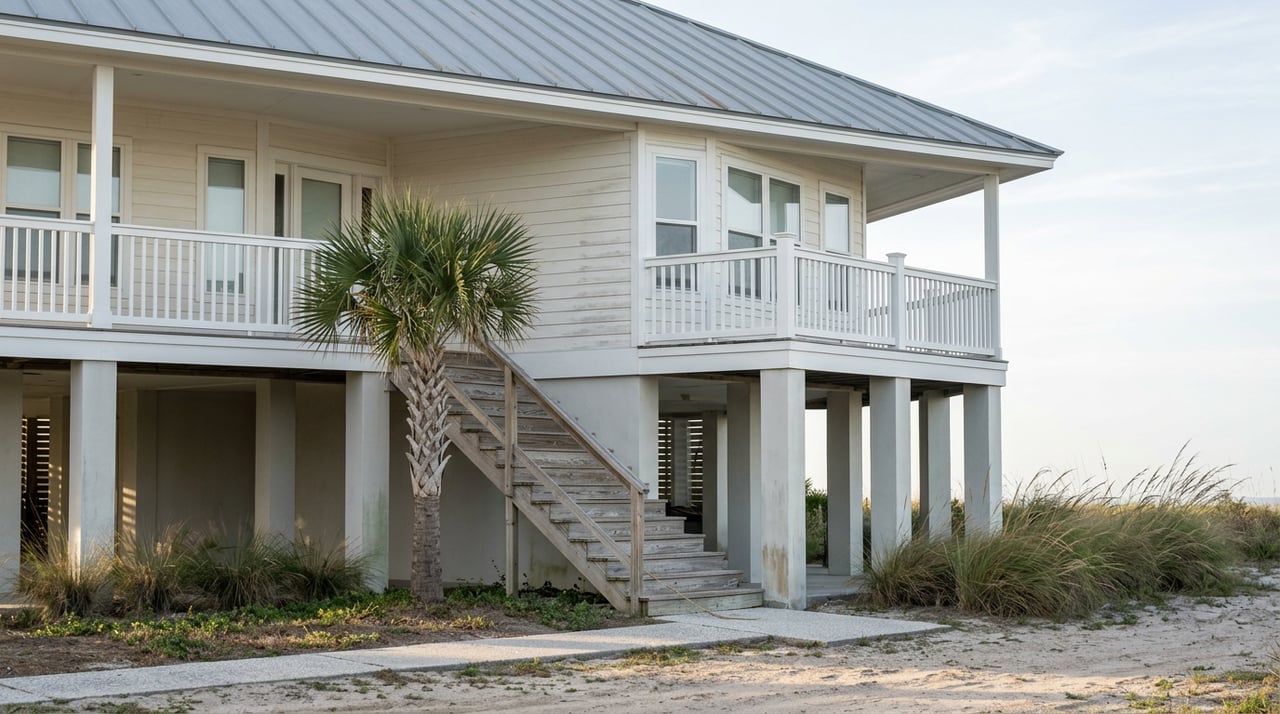
A wind mitigation inspection affects insurance premiums meaningfully in this market, and its results can be part of your renegotiation if the seller represented that the home had specific wind-resistant features. A four-point inspection — covering the roof, electrical, plumbing, and HVAC — is required by many Florida insurance carriers and worth knowing before closing. If the property is on or near St. Joseph Bay or the Gulf, a foundation review of pier-and-beam or elevated construction is also worth the cost.
Negotiating after the inspection:
- Prioritize functional and safety issues over cosmetic items — sellers respond better when requests are focused
- Ask for repair credits rather than completed repairs when you can — credits let you manage the work yourself after closing
- If inspection findings are significant, request a price reduction backed by contractor estimates rather than a vague ask
- Know your walkaway number before you get to this phase — it's easier to negotiate clearly when you've already decided what you won't accept
FAQs
Is it worth making an offer on a Gulf County property if there are other interested buyers?
Yes, but the strategy matters. In a competitive situation, leading with your strongest offer is more effective than leaving room to counter. Your agent can find out how many offers are expected and advise on whether escalation clauses or tighter timelines would strengthen your position.
How much can I realistically negotiate off the asking price in Port St. Joe right now?
It depends heavily on the specific property. Homes that have been on the market more than 60 days with price reductions have more room. Properties priced accurately and recently listed may accept only minor adjustments. We review the full market history before advising on an opening offer.
What happens if the appraisal comes in lower than the purchase price?
This is a real risk in a market where some listings have stretched pricing. If the appraisal is lower than the agreed price, you have several options: negotiate the price down to the appraised value, pay the difference in cash, or walk away if the contract has an appraisal contingency. We build appraisal contingency protections into buyer contracts as standard practice.
Buy a Home in Port St. Joe With Confidence
Negotiation on the Forgotten Coast takes local knowledge — of the market, the property types, and the dynamics specific to Gulf County coastal real estate. Our team has closed over 3,700 transactions in this market and consistently ranks #1 in the local MLS. We know where there's room to negotiate and where moving quickly is the right call. Reach out to us to learn more about how we guide buyers through every step of a Port St. Joe purchase.