Walk the beach south of the park gate before seven most mornings this month and you will pass at least one stretch of sand roped off with thin stakes and orange tape, sometimes with a wire screen staked into the ground beside it. Somebody has already been there. The volunteers with the St. Joseph Peninsula Turtle Patrol cover their six miles of shoreline on foot every single day from May 1 through October 31, reading the sand for the tell-tale tractor-tire drag of a nesting loggerhead before the morning heat erases it.
Most years, that routine barely registers as news. This year it does, because the number attached to it has moved further than anyone patrolling that beach expected.
In a spring report, WMBB quoted a longtime St. Joseph Peninsula Turtle Patrol volunteer named Swindall: "It's just a miracle... it's amazing that they can even do this."
The Six Miles Somebody Walks Every Morning
The patrol's job is simple to describe and hard to do well. They look for crawls, measure and photograph anything that looks like a nest, then mark it with stakes and flagging tape, adding a metal predator screen where raccoons or coyotes are a known problem. Nobody else touches those markers. If you see one on your walk, the instruction from the people who put it there is the same one they'd give a curious visitor: leave it exactly as you found it.
That patrol route runs the length of T.H. Stone Memorial St. Joseph Peninsula State Park, which the state park service describes as habitat for beach-nesting birds like the snowy plover, two of the last core populations of the endangered St. Andrews beach mouse, and three species of sea turtle. By mid-May this year, the patrol had marked exactly three nests for the season. That is a normal, unremarkable early number for this stretch of Gulf coast.
By early July, it was not three nests anymore.
The Number That Doesn't Match Last Year's Story
A survey conducted by Friends of St. Joseph State Parks that week put the in-park total at 204 documented nests, broken down as 189 loggerhead and 15 green sea turtle nests, according to reporting from WMBB. For comparison, a regional recap of the 2024 season put the entire in-park nest count at 95 for that year, split 94 loggerhead and 1 green. The patrol's own full six-mile total for the 2025 season, which covers more ground than the park boundary alone, came in at 236 nests.
Line those figures up and the pattern is hard to miss. The park-only count for 2026, taken while nesting activity was still very much underway, had already more than doubled the entire park-only total from two years earlier. And nesting season here doesn't wrap until mid-August, so the tally reported in early July was not even the final number for the year.
| Season | What was counted | Nests documented |
|---|---|---|
| 2024 | In-park nests only | 95 (94 loggerhead, 1 green) |
| 2025 | Full six-mile patrol route | 236 |
| 2026, through early July | In-park nests only | 204 (189 loggerhead, 15 green) |
Nobody who walks this beach daily needed a spreadsheet to notice more roped-off sections than usual this summer. What the numbers do is confirm the pattern was real and put a size on it.
Why the Beach Is Being Written On and Read At the Same Time
Here is the part that changes how you think about an August morning on this sand. Loggerhead and green sea turtle eggs incubate for roughly two months. Nesting season runs from May through mid-August. Hatching season runs from July through October. That means the nests laid back in May and June are the ones hatching right now, while the patrol is still out marking brand-new nests being laid this week.
For a few weeks each August, the same stretch of beach is doing both jobs at once. Somewhere south of the state park boundary, a hatchling is making its first run for the water tonight. A hundred yards away, a female loggerhead may be crawling ashore to lay the next nest of the season. Neither event asks your permission and neither one waits for the other to finish.
What That Means If Your Stretch Sits South of the Park Gate
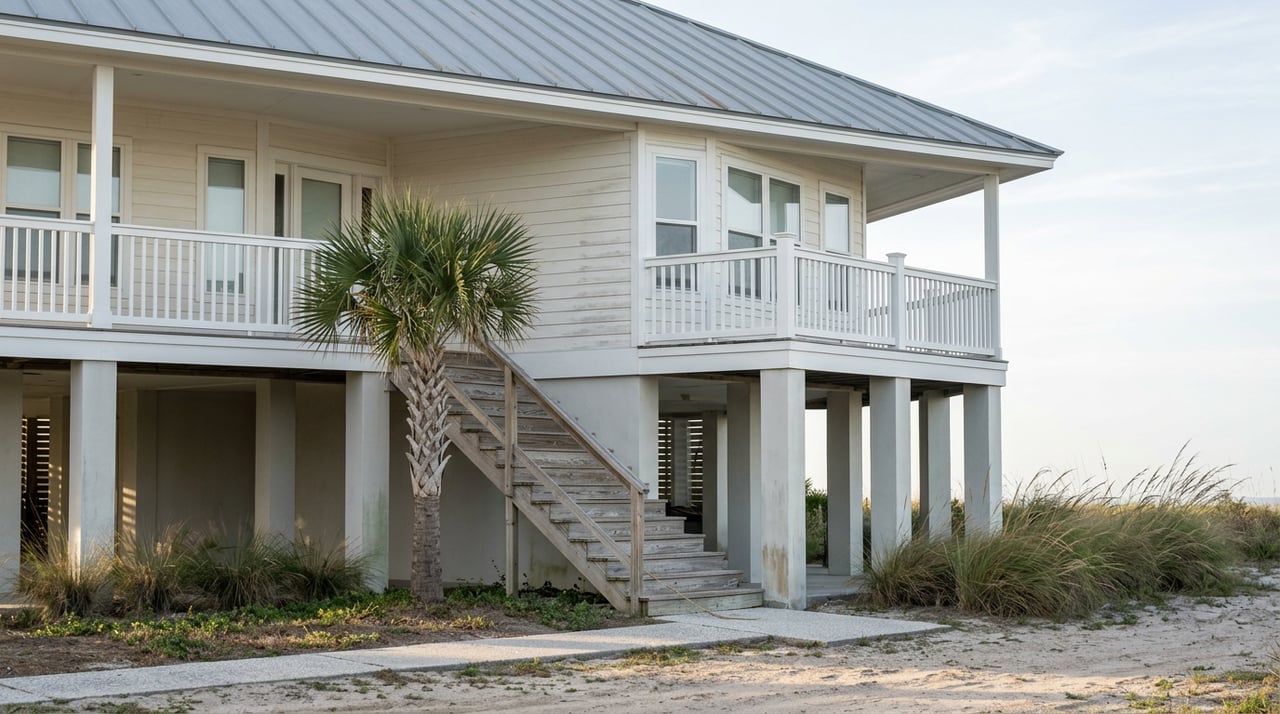
The state park documents its own nests carefully, but sea turtles do not stop nesting at a property line. The 2024 regional recap that put the in-park count at 95 also recorded 112 loggerhead nests laid on the non-park side of the peninsula that same year, meaning the residential beaches south of the park gate, the ones most South Cape San Blas homes actually front, saw more nesting activity than the park itself did.
That is the piece worth sitting with if you live down that end of the Cape. The record-setting number making the rounds this summer describes park-managed sand specifically. Your own stretch of beach, outside that boundary, has historically carried its own share of the load and there is no reason to expect this season broke that pattern only inside the fence line.
The Rules That Actually Matter for the Next Few Weeks
Gulf County's general beach rules exist for exactly this stretch of the calendar, and the short version locals already know by heart is to keep the beach clean, flat, and dark. In practice, that comes down to a handful of habits:
- Take chairs, canopies, and toys off the sand at the end of the day. A hatchling that runs into an abandoned cooler at 2 a.m. does not have the strength to go around it.
- Fill in any holes you dig. A nesting turtle or a group of hatchlings can get stuck in a hole deep enough for a kid's sandcastle moat.
- If you're on the beach after dark, swap a plain flashlight for one with a red or yellow filter. White light pulls hatchlings away from the water instead of toward it.
- Leave glass containers at home. Gulf County beaches don't allow them, and a hatchling doesn't distinguish broken glass from open sand.
- Bonfires are allowed, but keep them well clear of any structure and make sure every ember is out and cleared before you leave.
None of this requires a special trip or a change to your evening plans. It is mostly the difference between packing up the beach chairs and leaving them out overnight.
A New Way to Put Something Behind It
Friends of St. Joseph State Parks rolled out something new this year alongside the record nest count: a Nest Adoption Program that lets anyone symbolically adopt a documented sea turtle nest at the state park for fifty dollars, with the proceeds going directly toward the organization's preservation work inside the park. Details and sign-up are on the Friends of St. Joseph State Parks site.
It's a small program attached to a genuinely unusual season, and for residents who have watched the roped-off sections multiply along their morning walk all summer, it's a concrete way to put a name behind one of those markers rather than just stepping around it.
The Season You're Actually Living Through
The easy version of this story is "it's turtle season again," filed away with the scallop festival and the first cool front of October. The number attached to this particular season says otherwise. Whatever combination of tide, temperature, and luck produced a 204-nest count inside the park boundary by early July, with weeks of nesting still to go, this is not a quiet, ordinary year on this beach. It's one of the busier ones on record, and it's happening under your porch light right now.
If you have questions about life on this stretch of the Forgotten Coast, from the beach you walk every morning to the neighborhoods around it, the team at Beach Properties Real Estate Group has spent years getting to know this coastline block by block. Contact Us anytime you want a local's read on what's happening here.
This article is general information, not legal, tax or financial advice. Consult a qualified professional about your situation.