By Beach Properties Real Estate Group
We talk to buyers every week who arrive on the Forgotten Coast with the same general dream — a place on the Gulf where they can unplug, recharge, and own a piece of something genuinely beautiful — but without a clear picture of how they want to use it. The vacation rental versus second home question is one of the most consequential decisions you'll make in this market, and it shapes everything from what property you buy to how you finance it, insure it, and manage it year-round. Here's how we think through it with our clients.
Key Takeaways
- How you intend to use a property affects your financing options, tax treatment, and insurance requirements
- Gulf County and Port St. Joe have a relatively business-friendly regulatory environment for short-term rentals, but licensing requirements still apply
- The right answer depends on your financial goals, how much personal use you want, and your appetite for the operational side of running a rental
- Cape San Blas Gulf-front properties can generate significant rental income, but that income comes with real management responsibilities
What the IRS Says First
Before you get into amenities and location, it's worth understanding how the federal government draws the line between these two categories, because it affects your tax position from day one.
Under IRS rules, a property is classified as a second home — not a rental — if you use it personally for more than 14 days per year or more than 10 percent of the total days it's rented, whichever is longer. Cross that threshold and your deduction options change: you can still deduct mortgage interest and property taxes, but you lose the ability to deduct operating expenses proportionally against rental income.
Keep personal use below that threshold and the property is treated as a rental, which opens up deductions for maintenance, management fees, insurance, depreciation, and more — but also requires more rigorous record-keeping and income reporting.
Key tax distinctions to understand:
- Second home: Mortgage interest and property taxes are deductible; rental income under 14 days per year is not taxable at all
- Investment/rental property: Operating expenses, depreciation, and management costs are deductible; income is reportable and taxable
- 1031 exchanges: Rental properties qualify; personal second homes generally do not — a meaningful consideration if you plan to sell and reinvest later
We work with buyers on 1031 exchanges regularly in this market, and the second home versus rental designation matters from the very first purchase.
The Gulf County Regulatory Environment
Port St. Joe and Gulf County maintain a genuinely investor-friendly approach to short-term rentals compared to many Florida markets. There is no blanket ban or aggressive restriction on vacation rentals, but operating one legally requires several licenses and registrations across state and county levels.
Required documentation to operate a short-term rental in Gulf County:
- Florida DBPR vacation rental license (required for rentals under six months)
- Florida sales tax certificate for the state's 6% sales tax
- Gulf County STR business license through the county's online portal
- Tourist Development Tax registration for the county's 5% tax collection
- Comprehensive records for all tax remittance
Cape San Blas is consistently identified as a premium STR zone within Gulf County, with strong rental demand driven by proximity to the Gulf, T.H. Stone Memorial St. Joseph Peninsula State Park, and the uncrowded character that draws repeat visitors. Always verify zoning requirements for a specific parcel before purchasing — the Cape covers multiple zones and not every lot has the same regulatory footing.
Rental Income Potential: What the Numbers Look Like
The short-term rental market around Port St. Joe and Cape San Blas has shown consistent strength. Average daily rates across the broader Gulf County market run in the range of $235, with occupancy rates averaging around 61% — strong figures for a market of this size.
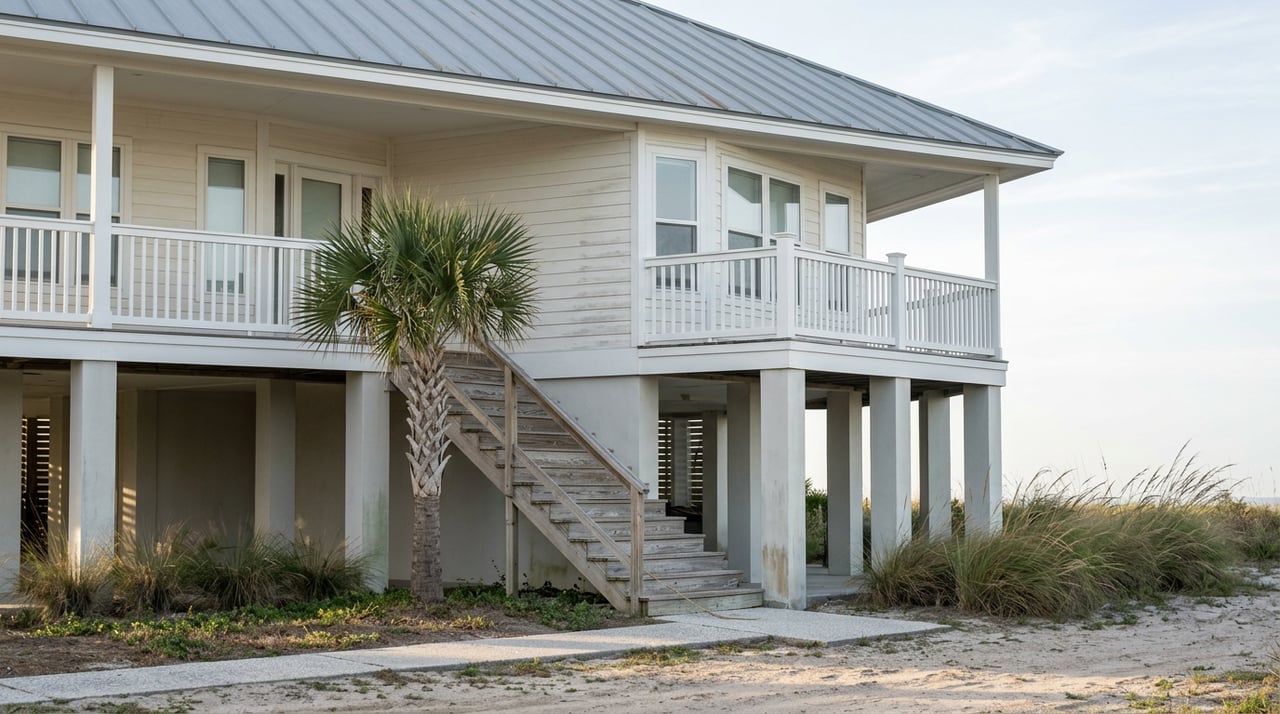
Gulf-front homes on Cape San Blas represent the top of that range. Properties with direct beach access, Gulf views, and well-appointed interiors have generated gross revenues well above $200,000 annually in recent years. That income potential is real, but so are the costs: management fees typically run 20 to 30 percent of gross revenue, plus maintenance, insurance at coastal rates, and the ongoing investment in keeping a rental competitive.
Properties that perform best as vacation rentals on Cape San Blas:
- Gulf-front or deeded beach access locations
- Three bedrooms or more, with sleeping capacity for larger groups
- Private outdoor space — decks, porches, or Gulf-facing outdoor living areas
- Pet-friendly accommodations, which expand your renter pool significantly in this market
- Well-maintained and consistently updated interiors
What the Second Home Path Looks Like
Buying as a personal second home — without the intent to rent — is a completely valid choice in this market, and one that many of our buyers make. The Forgotten Coast is genuinely one of the least commercially developed stretches of Gulf coastline in Florida, and that character is a large part of why people choose it.
The second home path means fewer compliance requirements, more flexibility in how you furnish and maintain the property, and the ability to use it on your schedule without managing around rental bookings. Financing is generally more straightforward than for a declared investment property, and you avoid the operational overhead of running a rental business.
Considerations that favor the second home approach:
- You plan to use the property frequently and want it available on short notice
- You want to avoid the management burden and guest turnover of an active rental
- Your primary goal is personal enjoyment and long-term appreciation, not annual income
- You plan to make the property your primary or retirement residence within a defined timeframe
The Hybrid Approach
Most buyers we work with end up somewhere in the middle — using the property personally during peak personal travel windows and renting it the rest of the year. This works well in the Cape San Blas market because summer demand is strong and many owners can capture significant rental income during peak season while still reserving personal weeks.
The key is being honest about how much personal use you actually want versus how much income you need, and structuring the purchase accordingly from the beginning. Making that decision clearly upfront determines everything from your financing structure to your insurance policy to your property manager relationship.
FAQs
Can we rent our property on Cape San Blas only occasionally and still call it a second home?
Yes, with an important caveat. The IRS allows up to 14 days of rental income per year on a personal residence with no tax implications. Beyond that, you move into mixed-use or rental territory and need to track personal versus rental days carefully. How you designate the property also affects what loan product you used to buy it — lenders have their own guidelines that may differ from the IRS rules.
Do short-term rental restrictions in Florida affect Cape San Blas?
Florida has a preemption law that limits local governments from banning short-term rentals outright if they were permitted before 2011, but local licensing requirements and zoning rules still apply. Gulf County's environment is currently favorable for STR operators, but regulations can change, and we always recommend verifying current rules before making any purchase contingent on rental income.
How does flood insurance affect the decision between rental and second home use?
It doesn't change the cost of the policy — your flood zone designation determines your premium regardless of how you use the property. What it does affect is your business model if you're running a rental: coastal insurance costs are a real line item in your operating budget and should be factored into any income projections before you buy.
Buy Smart on Florida's Forgotten Coast
Whether you're looking for a personal retreat, a rental investment, or something in between, getting the structure right from the beginning makes everything downstream easier. At Beach Properties Real Estate Group, we've guided buyers through every version of this decision across Cape San Blas, Port St. Joe, Indian Pass, and St. George Island, and we know what works in this market.