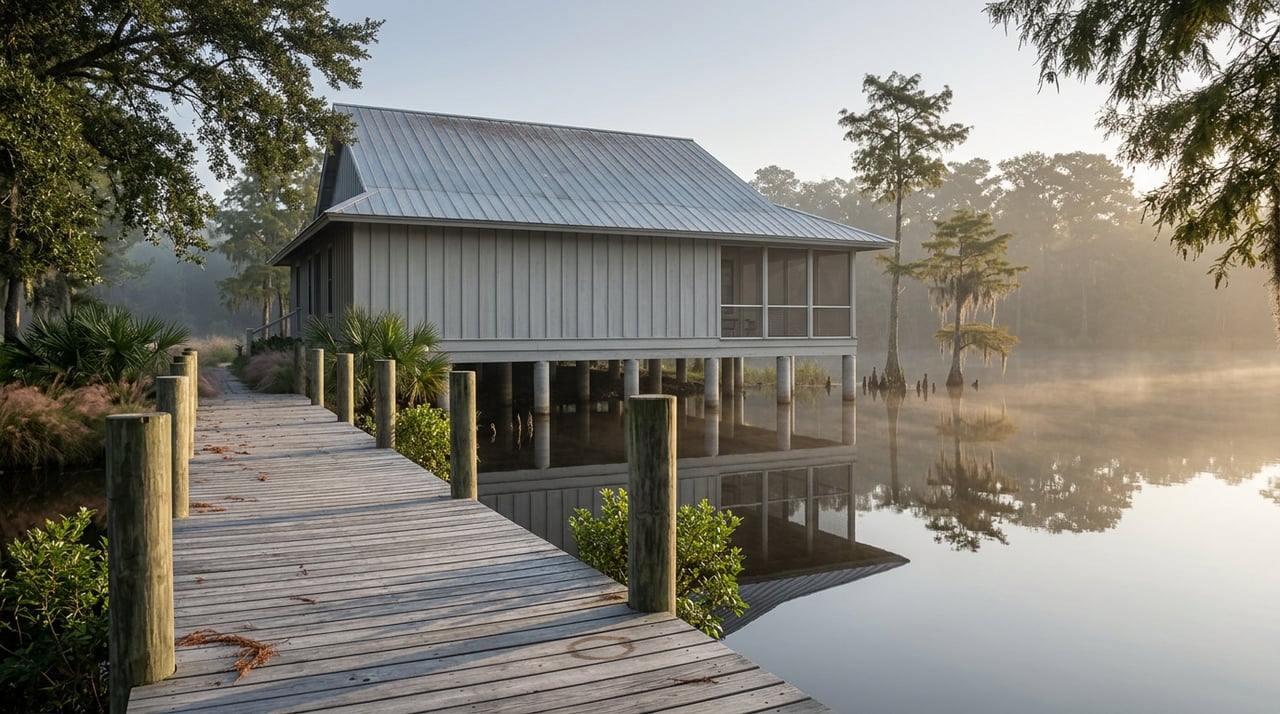
Every road sign coming into town still says it: Wewahitchka, home of the Dead Lakes and Tupelo Honey. It's true, and it's also the reason a lot of people show up in August expecting a honey town in full swing when the honey part of that sentence has been finished since spring. The tupelo bloom that makes this place famous runs about three weeks starting in late April, and this year's Tupelo Honey Festival, held on the third Saturday of May, was the last organized celebration of it until next spring. If you're picturing bees working white blossoms over the swamp right now, that picture is four months old.
What's actually running in late summer is a different clock entirely, and it's the one worth paying attention to if you live here. The fish in the Dead Lakes are in the middle of their own seasonal shift, moving out of the shallow cypress knees and into deeper water as the summer stretches on, and that change happens on the water, not on a festival calendar. Knowing which clock you're reading is the difference between an afternoon that works and one that doesn't.
The Clock Nobody Updates
Smiley Honey, the family-run operation on Bozeman Circle that's been under Will and Wandi's ownership since 2022, still keeps its honor-box retail stand open on its regular weekday schedule, so you can still walk up, taste, and buy a jar of tupelo, wildflower, or orange blossom whenever you want it. What you can't do right now is watch anyone harvest it. The bees already did their work back when the tupelo trees along the Apalachicola were blooming, and the honey sitting in jars today is the result of that April window, not anything happening this month.
A few miles away, L.L. Lanier & Son's has been doing the same thing since 1898, five generations running, the family whose swamp land and bee yards became the filming location for Ulee's Gold and whose homestead still sits near the town's water tower. Ben and Glynnis Lanier, with their son Heath now training to take over, aren't out working hives in late August any more than Smiley's is bottling fresh nectar. The honey clock in Wewahitchka is a spring instrument. By the time visitors associate this place with honey season, that season is already over, and locals know it without having to think about it.
The Clock That's Actually Running
The fish don't care about any of that, and the Florida Fish and Wildlife Conservation Commission's own site-specific guidance for Dead Lake is blunt about what's happening to them as summer wears on: look for panfish to move toward deeper water as the season progresses. Spring is when bream and shellcracker fishing here has its best reputation, working the cypress knees in two to four feet of water. Late August is a different game, played deeper and with different tactics.
| Species | Where to look now | What works |
|---|---|---|
| Bream / bluegill | Pushing off the shallow knees into deeper channels | Ultra-light rod, small hook, live bait fished on bottom |
| Shellcracker (redear) | Same deeper-water shift as bream | Number 10 gold hook with a wiggler |
| Stumpknocker / redbreast | Around stumps and snags, less affected by the depth shift | Worms or a beetle-spin near cover |
| Largemouth bass | Deeper holes next to shallow stumps and dead tree lines | Artificial worms, lizards, or spinnerbaits |
That table gives a seasonal picture of the lake, drawing on FWC's Dead Lake forecast, the same page that also warns anglers to watch for the cypress snags and stumps that give this lake its name and its reputation for productive, if occasionally frustrating, boating.
What the Pontoon Boat Actually Shows You in Late Summer
Off the Map Expeditions, Captain Matthew Godwin's operation registered out of Wewahitchka since 2013, runs pontoon trips into the Dead Lakes year round, with paddling trips added seasonally. Reviewers who've gone out with him in spring describe him pointing out blooming tupelo trees and sending them off toward Smiley Honey afterward, a nice bow on a honey-adjacent outing. That trip doesn't exist right now. What's still on offer in late summer is the version built on history and wildlife, not blossoms: the hydrology of how the lake formed, the stories about Indian artifacts turning up around the water, the otters and wading birds that are around no matter the season.
That's not a lesser trip. It's a different one, and knowing which trip you're booking matters if you're trying to show visiting family something specific. A guide who knows the lakes in December still manages to point out fishing habitat and wildlife even in the off season, which tells you the value of a trip like this isn't tied to the honey calendar at all. It's tied to the water, which is running on its own schedule regardless of what the road signs say.
Finding Your Way Is Still Wewa's Original System
None of this changes how people around here actually give directions. Wewahitchka has exactly one traffic light, and it's still the reference point locals use before sending anyone anywhere, including out to the lake itself. Just before that light, County Road 22, also marked as Lakegrove Road, cuts off toward a small bridge crossing the southern arm of the Dead Lakes, a spot with little enough traffic that parking at either end and walking to the center of the span for a look at the water is a normal thing to do here. It's not a scenic overlook with a sign or a pull-off built for tourists. It's just where the road happens to cross the lake, and it's the kind of stop that only shows up on a map once someone tells you it's there.
The Campground After Hurricane Michael
Dead Lakes RV Campground, out on Gary Rowell Road inside Dead Lakes Park, offers 39 full-hookup sites built to handle rigs up to 50 feet, along with a boat ramp straight onto the lake, a bait and tackle shop, and kayak access. It's also still working through a rebuild that followed Hurricane Michael, and recent visitors describe a property that's functional but still bringing pieces online, from bathhouse access to check-in signage. If you've got family planning to camp out here while they visit, it's worth asking ahead about bathhouse access and check-in arrangements. The lake access and the bait shop are the parts that are already solid.
Living on Both Clocks
None of this is really about honey or fish on their own. It's about understanding that Wewahitchka runs on two separate calendars that happen to share the same 6,700 acres of water, and that most of what outsiders think they know about this place is built on the spring one. The honey clock made this town famous and gave it its name on every welcome sign. The fish clock is what's actually setting the pace of a Thursday afternoon here, and it's the one that tells you where to point a boat, what hook to tie on, and whether the trip you're booking is the one you think it is.
If property here, or anywhere else along the Forgotten Coast, is starting to cross your mind while you're thinking about where you actually spend your time, Beach Properties Real Estate Group has spent more than two decades paying attention to exactly this kind of local detail. Reach out when you're ready to talk it through.